
The Journal · Education & AI · October 15, 2026
Accent, Not Replace: Dr. Kester Crosse on AI and Students
Live on 13News Now, my friend of 35 years gave the clearest rule for AI I have heard. As someone who builds AI tools for a living, I agree with every word.
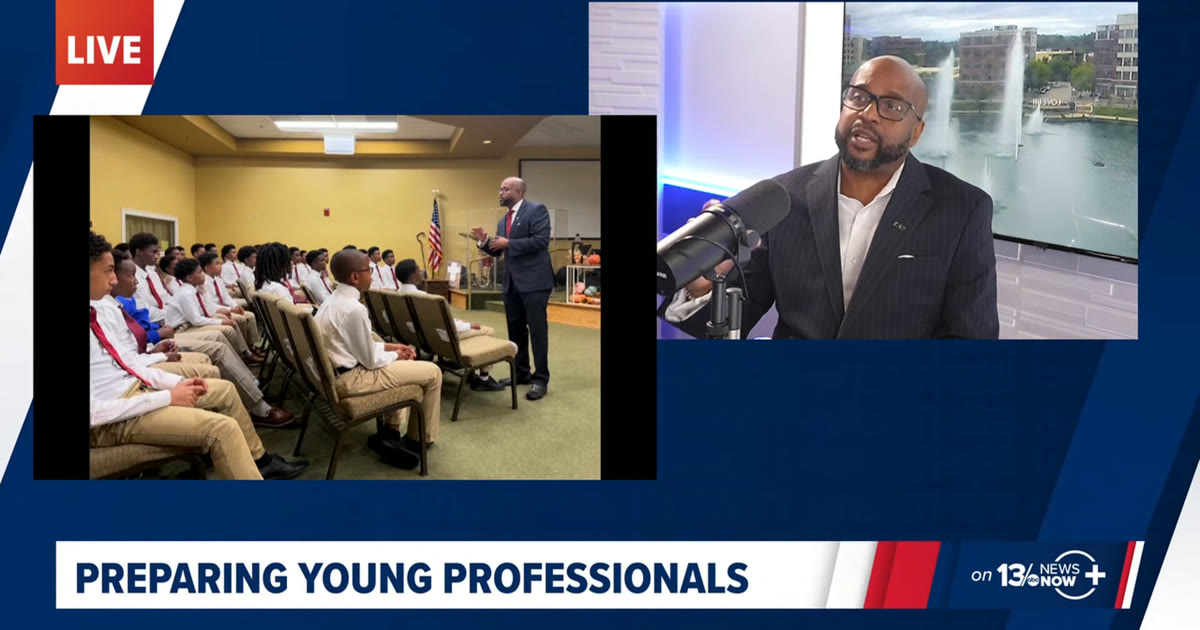
Dr. Kester Crosse’s answer to the AI question fits in one sentence: technology should accent a student’s life, not replace it. He said it live on 13News Now in Hampton Roads on October 12, 2026, the morning he was headed to Hampton University, where he and I were students together. Watch the five-minute segment here.
“You need to have your ability to think, your ability to work hard, your ability to communicate,” he told the anchor. “That is what makes humans important, and we can never lose that.”
Why a studio that builds AI is saying this
At Smith App Studio we put AI into real products: an AI receptionist that answers the phone, assistants that draft and summarize. So you might expect us to argue that students should use it for everything. We don’t. The best tools we build take the busywork off a person’s plate so they can do more of the human part, not less. That is exactly Kester’s line: when the tool replaces the thinking, there’s a problem.
What the numbers say
The habit is forming fast. Pew Research Center found that 26% of U.S. teens used ChatGPT for schoolwork in 2024, double the 13% a year earlier. Only 18% of those 1,391 teens said using it to write essays is acceptable, so even students sense where the line sits.
The cost shows up in adults, too. A Microsoft Research and Carnegie Mellon study of 319 knowledge workers, presented at CHI 2025, found that the more people trusted generative AI, the less critical thinking they applied. An early MIT Media Lab preprint with 54 participants found ChatGPT-assisted essay writers showed the weakest brain connectivity and struggled to quote their own work.
“You can’t learn to ride a bike through AI. You have to get on it.” — Dr. Kester Crosse
The gym that lifts the weights for you
His picture for parents is a gym that does your reps. You can go every day and never get stronger; you actually get weaker. So during the fundamental years, roughly ages 5 to 16, he says to limit what AI does for a child and let it accent their life, while they do the work that builds the muscle memory. We wrote about the same tension in the two-hour AI school day and in our guide to studying for any exam.
The room where everybody is smart
Kester’s deeper point is about what comes after school. “At some point you’re going to be in a room where everybody is smart and everybody has a degree,” he said. The difference is emotional intelligence. Employers agree: the National Association of Colleges and Employers finds communication rated essential 96% of the time, yet new graduates rated proficient only 54% of the time. No chatbot closes that gap for you.
That is the whole argument of his book, Open Doors, which I wrote about at its launch. His simplest tool is the FROM method: ask people where they’re From and about their family, their Recreation, their Occupation and their Motivation. You can practise it free in the Open Doors companion workshop.
Watch it, then pass it on
Kester wrote up the interview on his own site: AI Should Accent Your Life, Not Replace It. The segment also lives on his Watch page, and schools can book him through opendoorssuccess.com. If a parent, teacher or coach you know is wrestling with the AI question, send them this.
Frequently asked questions
What did Dr. Kester Crosse say about AI on 13News Now?
On October 12, 2026, he said technology should accent a student’s life, not replace it. Students still need the ability to think, to work hard and to communicate, because those are what make people valuable, with AI or without it.
How many teens use ChatGPT for schoolwork?
Pew Research Center found 26% of U.S. teens aged 13 to 17 used ChatGPT for schoolwork in 2024, double the 13% in 2023, in a survey of 1,391 teens.
Does using AI weaken critical thinking?
A Microsoft Research and Carnegie Mellon study of 319 knowledge workers, presented at CHI 2025, found that higher confidence in generative AI was associated with less critical thinking, while higher self-confidence was associated with more.
How should parents handle AI for children?
Dr. Crosse advises limiting what AI does for children during the fundamental years, roughly ages 5 to 16, so they build skills through their own effort, and using technology sparingly to accent their lives rather than do their work.