
From the Journal · November 10, 2026
Solvisi: A Small Studio With Big “What Ifs”
In Bel Air, Maryland, one designer is turning other people’s ideas into websites, glass-bright graphics, tap-to-connect fobs, digital magazines, 3D models and walk-in VR rooms. We have been watching the work, and we love it.

Some studios show you a portfolio. Solvisi shows you a personality. The home page of Solvisi opens with four words, “Your vision. Beautifully unexpected.” Then comes a promise most agencies would be too careful to make: “You bring the ‘what if.’ I bring the imagination.” Spend ten minutes on the site and you believe it.
Solvisi is the independent creative studio of designer Jodie Jewell in Bel Air, Maryland. It serves Bel Air, Harford County and the rest of Maryland, and takes on online projects for clients across the country. The studio’s own description is the best one: “Big imagination. Real human.”
Glass, light and a little bit of wonder
The first thing you notice is the art. Solvisi’s service pages are illustrated with glowing glass objects: a little glass house for websites, a hot-air balloon for first impressions, an infinity loop for connection, and an open book that blooms into butterflies for digital magazines. It is a visual signature, and it is consistent everywhere the studio shows up.

Behind the art are four clear services. Websites that give a brand “a home,” with clear messaging. Graphics & reels built to “make your first impression count.” NFC & QR tap-and-scan experiences for introductions and connections. And digital magazines: brochures and publications people can actually page through. The studio also builds interactive 3D and VR rooms for websites, and says plainly that it uses AI-assisted production under human direction. The process is just as simple: Share your idea, Shape the direction and scope, then Create, with your feedback built in. You can see the range in Solvisi’s selected work.
GLBzi: “Create It. GLB It.”

The product that stopped us scrolling is GLBzi. It is a 3D creation tool that runs in the browser, including on an iPad. The 3D Workshop is live today and needs no AI credits: combine shapes, move, rotate and resize them, swap material presets or upload your own textures, undo and redo as often as you like, then export the result. It imports GLB files up to 50 MB, saves projects locally or to an account, and backs up whole libraries as .glbzi files you can restore later.
If “GLB” is new to you: it is the single-file, binary form of glTF, the 3D format standardized by the Khronos Group. One GLB carries a model’s shape, materials and textures together, which is why it is the everyday file of 3D on the web, in VR and in augmented reality.
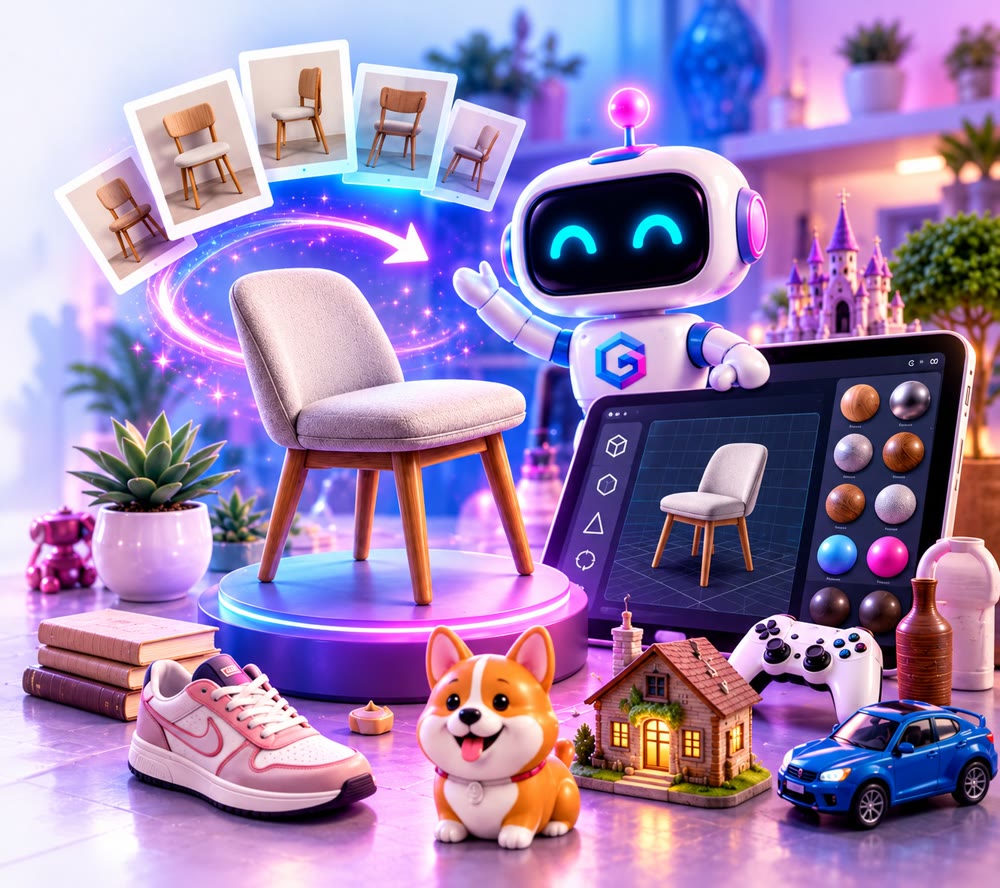
The headline feature is Photo-to-3D, listed on the site as coming soon. Take four photos of an object (front, back, left and right, with an optional fifth) and GLBzi will turn them into a downloadable 3D model. The credit rules are refreshingly fair: one credit equals one finished GLB, a credit is only used once a valid model is saved, and a failed or canceled job gives the credit back. Reopening or re-downloading a model you already made costs nothing extra. Their tagline says it best: “Your next big idea starts with a little play.”
Roamzi: “Your imagination has a place to go”
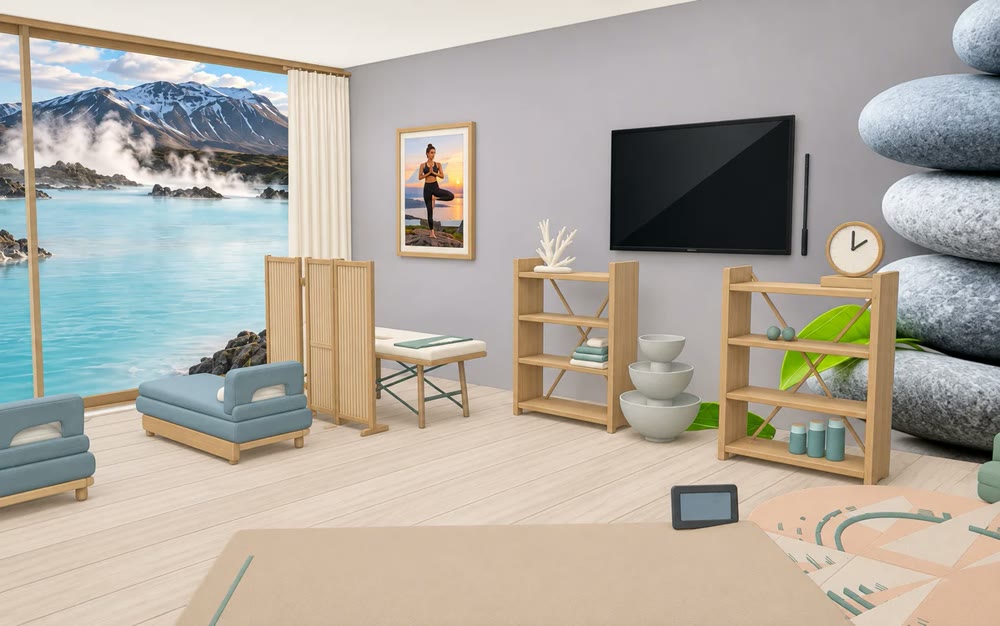
GLB files need somewhere to live, and the Solvisi family has an answer for that too. Roamzi builds 3D and VR rooms in the browser, with no coding: a virtual shop, an art gallery, a showroom, a wellness space or a hangout. Pick a window view, furnish the room, change the wall colors and wallpaper, add your own images and logos, then share it by link, put a QR code on your marketing, or embed the room on your website.
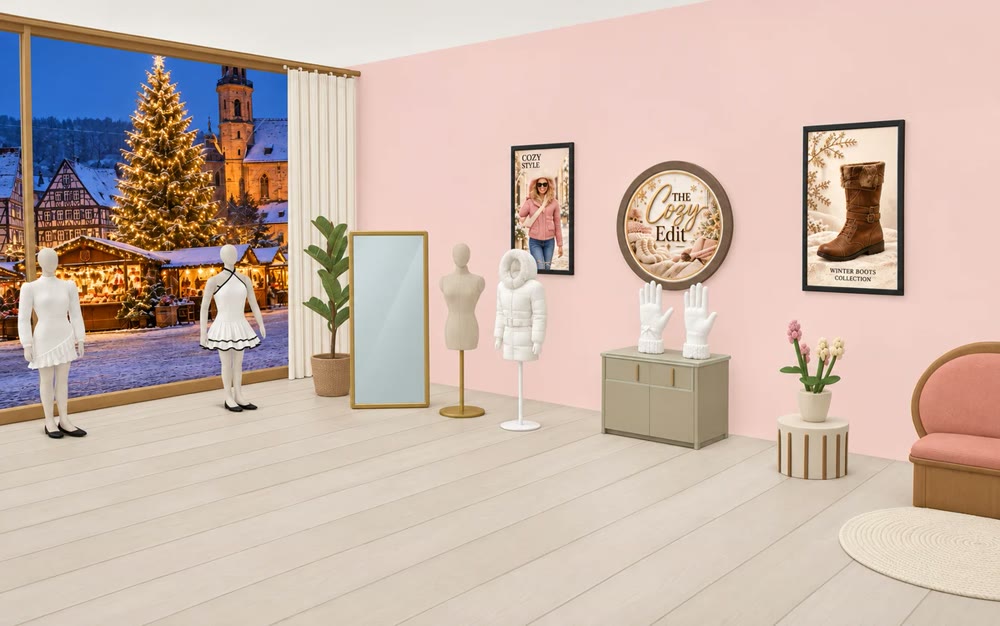
Visitors can explore on a phone, a computer or a compatible VR headset, and signed-in visitors in public rooms can see each other and choose to talk by voice. Higher plans add products, website links, in-room TV video and doors between rooms. GLBzi exports are made to work with Roamzi, and a one-click “Send to Roamzi” is on the GLBzi roadmap. You can walk a sample room right now.
One little tap, one beautiful page
The rest of the family is just as thoughtful. Hello by Solvisi turns an introduction into custom NFC key fobs and business cards: “One little tap. A whole lot of you.” TapAble uses NFC and QR fobs to connect helpers with the information a parent chooses to share. SnapShot is a QR photo booth for events.

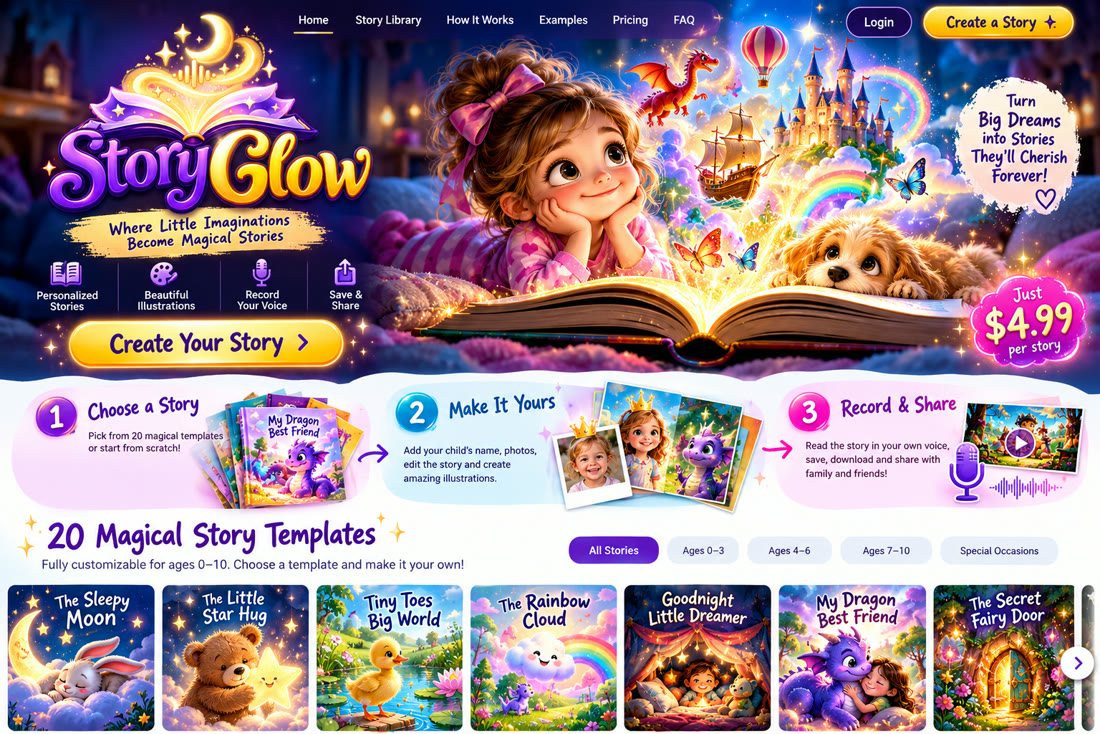
Folio by Solvisi turns an ordinary PDF into a digital magazine, brochure or book with real corner-touch page turns, ready to share by link or embed on a website. And StoryGlow may be the sweetest thing in the portfolio: personalized children’s storybooks, with 21 illustrated stories or a blank book, a child’s name and photo, and narration recorded in a familiar voice, as a digital book or a hardcover. A teleprompter and recording studio called Cuefetti is listed as coming soon.
Real businesses, real personality
For all the products, Solvisi is still a studio that builds for neighbors. The selected work includes Double J’s Auto Detailing, Justin’s RC Repair and Curious Jewell Travel: small businesses that got a website with a personality all its own, exactly as the home page promises.
Why we admire it
We build apps, websites, 3D worlds and video ourselves, so we know how rare it is to see one person ship this much, this well. What stands out is not just the volume. It is that every product solves a real, human problem: an introduction that does not get lost in a wallet, a brochure people actually page through, a bedtime story in a grandparent’s voice, a 3D model you can make from four photos. The imagination is big. The products are practical. That is a hard combination to pull off.
If you have a “what if” of your own, Solvisi’s door is open at solvisi.com, by email at info@solvisi.com or by phone at 410-306-5151. Start with GLBzi and Roamzi. We think you will have as much fun as we did.
Jodie, beautifully unexpected is right. Keep the “what ifs” coming.
Images on this page come from Solvisi and its product sites and are shown with credit for commentary; all rights belong to their owners. To correct a detail or a credit, email smithappsupport@gmail.com.
This piece was written by Smith App Studio. More plain-English writing on design and technology is in the Smith App Studio Journal.
Related reading: what Solvisi’s launch visuals teach about scroll-stopping posts on the PostPilot blog, and how GLBzi turns everyday photos into portable 3D on Nexaria.
More from the Journal
Anything You See Here, We Can Build for You → MacKenzie Price Is Building Geniuses →