VR World · Built by Smith App Studio
Meridian Row
A lamplit sneaker boutique you can walk into — and pick things up in.
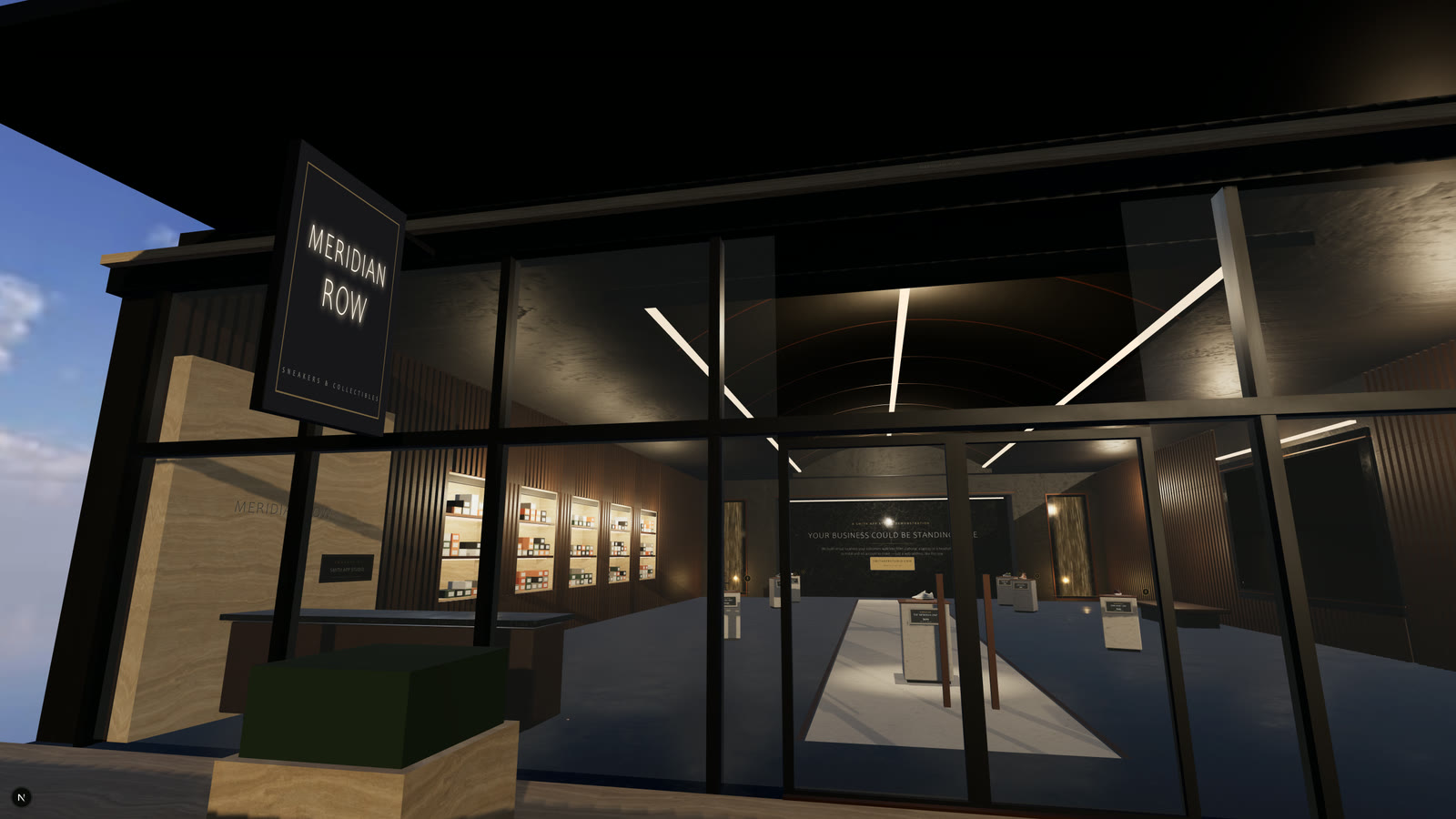
Opens in the browser you already have — joystick on a phone, keyboard on a computer, full VR on a headset. No app, no download, no account.
Walnut, lamplight and a vaulted ceiling: a 22‑metre boutique where the products stand on plinths down the middle and the shelves climb the walls. Every shoe here is a real three‑dimensional object — not a photograph pinned to a card. Walk around one. Crouch to it. The light falling on the leather is the light in the room.
Then pick it up. On a headset you reach out, close your hand, and the shoe leaves its plinth and comes with you, turning as you turn your wrist; open your hand and it eases back home. On a phone or a laptop you drag to turn it over. Either way you are doing the one thing a product page has never let anyone do.
Try this first
- Tap ▶ Show me around — a voice walks you the length of the room in five stops.
- Touch a plinth to open a product, then turn the shoe over and look at the sole.
- Walk to the far wall and watch the film — it is rendered from the shop’s own products, so it is never out of date.
- In a headset, squeeze the grip beside a product and take it off its stand.
A demonstration storefront. Meridian Row is a fictional business — nothing is charged and nothing ships. The products stand in for a real catalogue.
Your products, standing in a room
A real object becomes a model one of two ways: photograph it from every angle, and the scan comes back accurate down to the stitching and the scuffs; or build it from the manufacturing drawings, when the piece is engineered rather than made. Either way it ends up as something a customer can stand next to.
From there the shop is a list. Each product carries its own name, price and plinth, so adding one is a line of configuration rather than a rebuild — and the film on the far wall re‑renders itself from that same list. How immersive commerce works covers the rest, and 3D product models covers how yours get made.
Yes — We Build These
What we can build for your business
Meridian Row is a demonstration, and everything standing in it is something Smith App Studio builds to order. Six pieces make up a world like this one.
Your products as real objects
We photograph the item from every angle and rebuild the surface — accurate down to the stitching and the scuffs — or build it exactly from your manufacturing drawings when the piece is engineered. You get the source files in an open format you can use anywhere.
A shop wired to your catalogue
Every plinth and shelf reads its name, price and link from one product list, so adding a line is configuration rather than a rebuild. Displays can open your real product page and hand the customer to the checkout you already run.
Picked up and turned over
In a headset the visitor reaches out, closes a hand, and the product leaves its stand and turns as they turn their wrist. On a phone or a laptop they drag to spin it. It is the one thing a product page has never let anyone do.
One link, every device
Phones, computers and headsets open the same address — no app, no download, no app‑store review, no account. You post a link and the world is live; send it to a client and it loads in the browser already on their desk.
A guide who speaks for you
A narrated walk that stops at the pieces you want seen, in a voice chosen to suit the brand — or a live AI host, as in The Grand Hall, that answers questions about whatever the visitor is standing in front of.
Screens that cannot go stale
The film on the back wall of this shop is rendered from the same product list the plinths read, so it re‑cuts itself when the catalogue changes. No reshoot, no edit, no out‑of‑date window display.
The room gets built around the goods, never the other way round. Meridian Row is walnut, brass and lamplight because that is what a boutique wants; Northgate is full daylight, Snotty's World is neon and concrete, The Concourse gives eight brands a suite each. Yours gets drawn from your own materials, signage and palette.
Fixed scope, clear milestones, and you own what we build — the world, the 3D models and the source files behind them. Start with how immersive commerce works, or see twenty‑five finished worlds ready to walk today.
More worlds
Want one of these for your own brand? We build walkable flagships, showrooms and launch spaces that open from a single link. Book a consultation.